
Support vs. Volume: The Most Misunderstood Concept in Clarinet Playing
Jan 20, 2026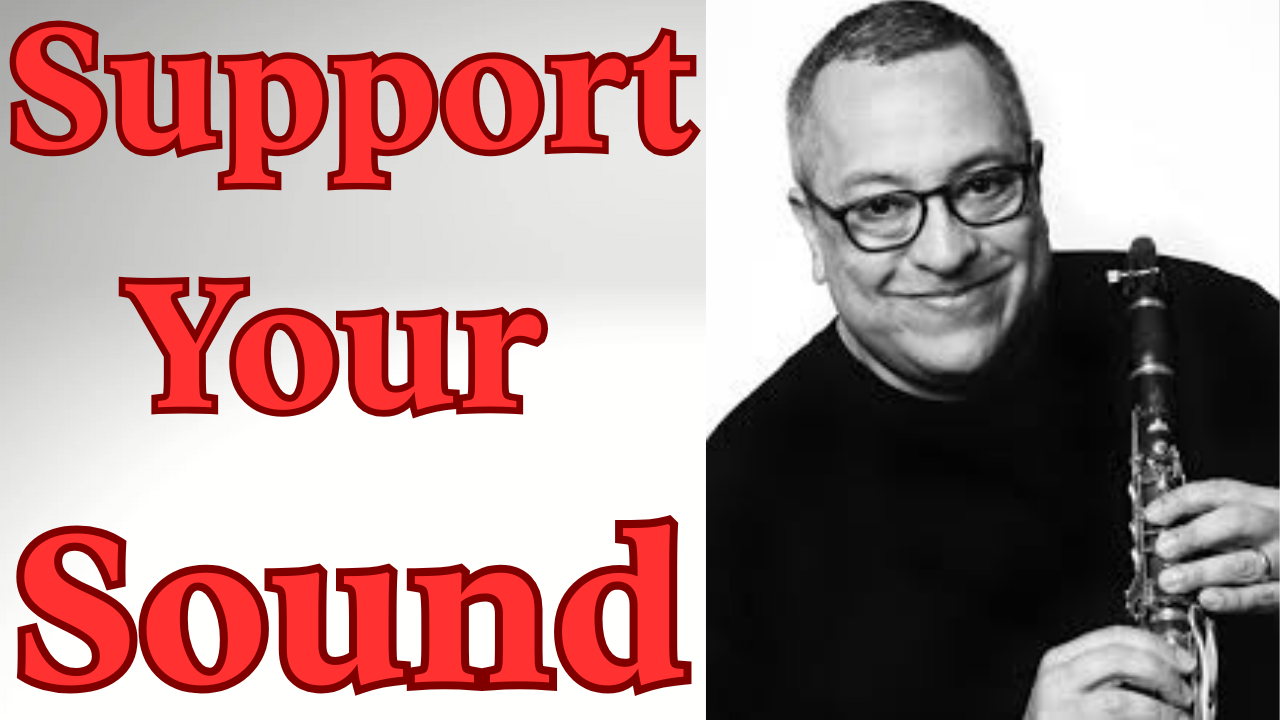
Support vs. Volume: The Most Misunderstood Concept in Clarinet Playing
Insights from my conversation with educator Dave Sapadin
If you've ever been told to "use more air" and ended up just playing louder instead of better, this article is for you.
In a recent episode of the Clarinet Ninja Podcast, I sat down with my longtime friend and accomplished educator Dave Sapadin to discuss one of the most critical and most misunderstood aspects of clarinet playing: the difference between air support and volume.
The Problem with "Use More Air"
It's the most common instruction in band rooms across the country: "Use more air!"
But here's what happens: Students interpret this as "blow harder" or "play louder." They push more air through the instrument, the sound gets louder, and they think they're supporting the sound.
They're not.
As Dave explained in our conversation, "The difference between support and volume is the most difficult thing for students to understand. You can say it, and it makes sense when you say it out loud. But it's another thing when you're living through it."
So What IS Air Support?
Real air support isn't about volume. It's about:
- The speed of the air
- The intensity and direction of the airstream
- Engaging your core properly
Dave put it this way: "It has to do with the direction and the intensity of the air stream. A lot of times people think they're only supporting the sound when they're playing loud. But what happens when you play soft?"
That's the key question. If your support only works when you're playing forte, you don't understand support. You're just playing loud.
Your Embouchure Probably Isn't the Problem
Here's something that surprised me in our conversation: Dave is "pissed off" about how much embouchure gets blamed for problems it didn't cause.
He demonstrates this for his students by playing beautifully with an intentionally terrible embouchure, then playing poorly with a "perfect" embouchure.
His point? It's not the embouchure. It's the way you're putting air into the instrument.
Dave teaches his students a specific problem-solving checklist:
- Check your AIR first (speed, direction, intensity)
- Check your THROAT (is it open? tense?)
- Check your FINGERS (timing, connections, accuracy)
- ONLY THEN check your EMBOUCHURE
He says: "Most of the time they get through that checklist and embouchure's last. They never get to embouchure. They don't have to."
The Distance Factor: What You Hear vs. What They Hear
One of Dave's most effective teaching techniques is making students walk different distances away from him while he plays.
"I know I sound this way when you're sitting this close to me," he tells them. Then he makes them stand across the room and plays exactly the same way.
The students are always shocked. What sounds warm and beautiful up close often sounds unfocused and mushy from a distance.
The lesson? You're trying to create focus up close. As it expands into the hall, THEN you get warmth of sound.
If you create a warm, rich sound up close, it gets diffused as it travels. "Only the flute players in the orchestra get to enjoy your beautiful sound, and no one in the hall can hear you," Dave explains.
From Buffet to Uebel: Dave's Equipment Journey
Our conversation also covered Dave's evolution through different clarinet brands:
- Buffet R13: His first professional clarinet
- LeBlanc Opus: A turning point for intonation consistency
- Backun MOBA (cocobolo): Beautiful but required work to focus
- Uebel: His current choice, offering better focus for his playing style
The key insight? Every instrument is a compromise. You get some things but not others. The question is: what makes it easier for YOU to make music?
For Dave, as primarily a bass clarinet player who's "always trying to get things up to pitch," the Uebel's natural focus was the right choice. For an E-flat specialist, the MOBAs might be perfect.
Lessons from the Masters
Dave studied with both Ricardo Morales and Yehuda Gilad, and he shared some powerful moments from those experiences:
From Ricardo Morales: When frustrated with Dave's playing, Ricardo said: "You know what a good clarinet sound is. Why don't you just make one?"
Dave admits: "He was right. We get so involved in the notes in front of us that we lose sight, we're in survival mode. We forget about trying to make this sound pretty."
From Yehuda Gilad: Everything was about AIR. Dave's old lesson books literally have "AIR" carved into them in frustration. Yehuda's methods were unconventional. He made students do long tones while doing sit-ups or riding an exercise bike, all to engage the core.
Teaching Beyond the Notes
What makes Dave such an effective teacher (his students consistently earn top honors, including first chair in New York State)?
His philosophy: "I don't worry about trying to get them through repertoire. I want to fix the clarinet problems, and I'm using the music as a tool to fix that."
Too many students think they've succeeded when they play all the right notes and rhythms. Dave teaches them that's just the starting point.
"I teach them to not accept," he says. "That's the issue with their playing. They accept it because they played all the right notes. But let's put it on Spotify. You ready? You nailed it? No, what's wrong with it?"
The Pandemic's Impact
One unexpected topic we discussed: how the pandemic has affected student playing.
Dave has noticed students are reluctant to play loud or with full sound because they spent so much time practicing quietly at home ("My sister's in the other room studying, my dad's over here...")
His advice to students? "It's time to play forte. You can't play forte and expect it to only happen on the job if you never practice it at home."
The Bottom Line
Whether you're a student, teacher, or adult amateur, here are the key takeaways:
- Support does not equal volume. Learn the difference between air speed/intensity and just blowing harder
- Check air, throat, and fingers before blaming your embouchure
- What you hear up close is different from what the audience hears
- Every instrument is a compromise. Find what helps YOU make music
- Getting the notes right is just the beginning, not the end goal
- Don't accept mediocrity in any area of your playing (or your life)
Watch the Full Episode
Want to dive deeper into these concepts? The full podcast episode offers even more insights into teaching philosophy, equipment choices, collaborating with world-class teachers, and practical problem-solving techniques you can apply immediately.
Ready to Transform Your Playing?
If you're an adult clarinet player looking for structured guidance, personalized feedback, and a supportive community of fellow clarinetists, check out the Clarinet Ninja Dojo.
We work on exactly these kinds of concepts: support vs. volume, sound production, intonation, and musical expression, in a way that actually makes sense for adult learners.
Have questions? Email me directly. I'm the only one in my business, and I respond personally to every message.
Happy practicing!
Jay Hassler
The Clarinet Ninja