
Remembering Ken Peplowski: What Anat Cohen, Paquito D'Rivera, and Evan Christopher Told Me
Jun 08, 2026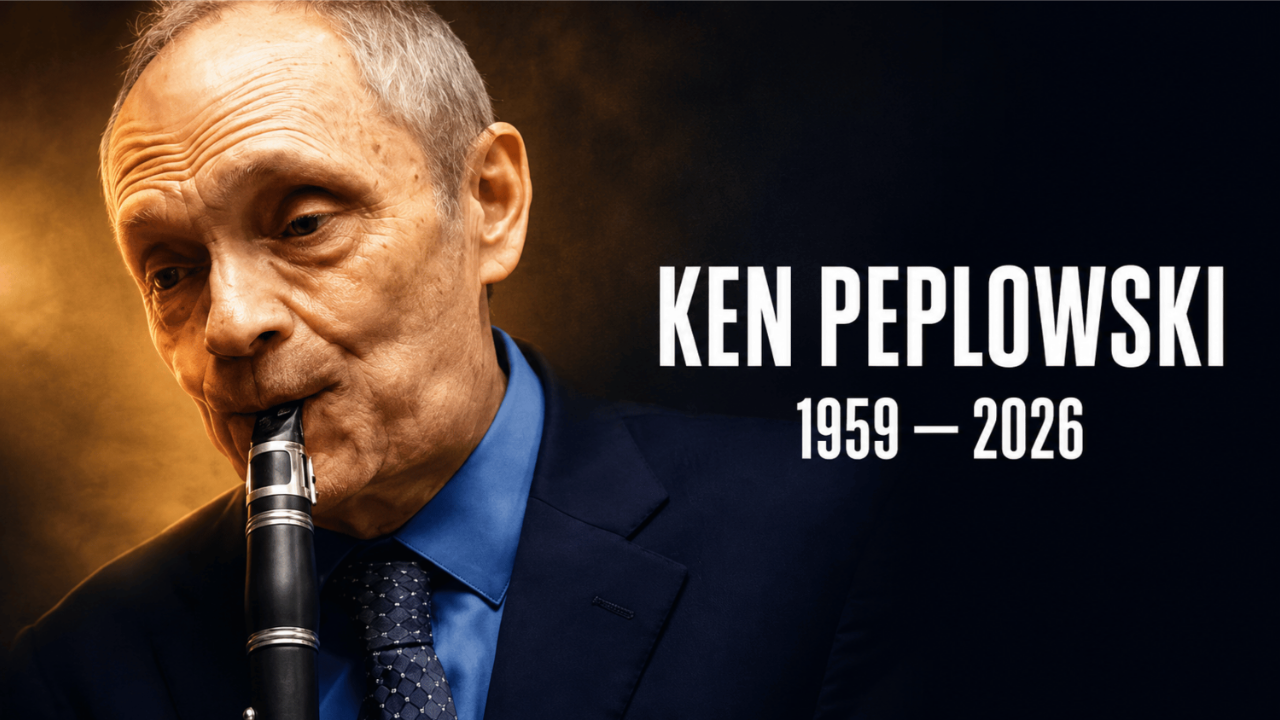
Remembering Ken Peplowski: What Anat Cohen, Paquito D'Rivera, and Evan Christopher Told Me
A new Clarinet Ninja Podcast episode built from three conversations with the clarinetists who knew him best.
On February 2, 2026, Ken Peplowski played his last notes on a stage aboard The Jazz Cruise, a floating jazz festival in the Gulf of Mexico. A few hours later, he was gone. He was 66 years old.
The night before he died, Ken was performing a set called Art of the Clarinet alongside Anat Cohen and Paquito D'Rivera. By every account, it was the kind of night nobody wanted to stop. They played late. They went to the bar afterward. They had too much fun.
That is how Ken Peplowski spent his final hours as a musician. Playing with two of the best clarinetists in the world, doing the thing he had spent his entire life getting very, very good at.
This new episode of the Clarinet Ninja Podcast is a tribute to Ken, built from conversations with three of the people who knew him best on a bandstand.
ABOUT THIS EPISODE
I sat down separately with Anat Cohen, Paquito D'Rivera, and Evan Christopher. Anat and Paquito were on the Jazz Cruise with Ken and played with him in the days before he died. Evan knew Ken through years of crossing paths at festivals, jazz parties, and the small, tight-knit world of jazz clarinet players.
Rather than run three separate interviews, I organized the footage thematically, so the three of them are essentially in conversation with each other across six chapters. They talk about the same man from three different angles, and what comes through is a portrait that feels specific and true.
This is not an obituary episode. It does not feel like one. These are warm, funny, opinionated musicians talking about a colleague they genuinely loved, and the conversation reflects that. Paquito calls the jazz clarinet world a little mafia. Anat describes standing between Paquito and Ken on stage and feeling like she was in heaven already. Evan talks about the standards Ken set for himself so quietly that you had to pay close attention to notice them.
WHO WAS KEN PEPLOWSKI?
Ken Peplowski grew up in Cleveland, Ohio. His father was a police officer who also played music, and he organized his sons into a family polka band. Ken started on clarinet at nine years old, turned professional at ten, and eventually made his way to New York, where he joined the Tommy Dorsey Orchestra under Buddy Morrow and later played with Benny Goodman.
He recorded more than 70 albums as a leader across labels including Concord and Arbors Records. He appeared as a sideman on hundreds more. He performed at Carnegie Hall, Birdland, the Hollywood Bowl, and jazz festivals across the world.
He had been battling multiple myeloma since 2021. He reached full remission in 2024 and was planning his comeback shows. His only complaint in his final weeks, according to Anat, was that his back hurt.
He was called by many people, in print and in person, the greatest living jazz clarinetist. The musicians I spoke with for this episode did not disagree.
WHAT THE EPISODE COVERS
The episode is organized into six chapters.
The Last Night covers what actually happened on the Jazz Cruise, the Art of the Clarinet show, and the morning Ken did not show up for his afternoon set.
Who Was Ken brings together memories of his personality: the humor, the Midwestern humility, the exacting standards that he never announced but always maintained.
What You Heard When He Played goes into the sound itself. Three master clarinetists describing the same player is genuinely fascinating listening. They all land on the same words: even, organic, warm, classical underneath the swing.
Where He Fit in the History looks at Ken's unusual position in jazz. Evan points out that Ken's frame of reference was always the songs first, not the lineage. Paquito describes Ken as one of the very few players who could move fluently across every era of jazz.
The Clarinet Brotherhood is about the small, tight-knit world of jazz clarinet players and what Ken meant to it. Paquito says that playing alongside Ken made him play better, and that he was maybe a little afraid of him.
The End and the Legacy handles the illness, the comeback, and what he leaves behind. Evan's closing thought on this is worth the whole episode on its own.
A FEW MOMENTS THAT STAYED WITH ME
Paquito mentioned, almost in passing, that Ken had announced he would perform twelve different sets that week on the cruise without repeating a single standard. Think about what that means. Not just the repertoire, which is staggering. But the confidence. The certainty that he had enough music inside him to fill twelve sets without going back to the same well once.
Evan described the first time he really understood what made Ken different. It was not a single performance. It was a conversation about a specific song, the melody, the harmony, the history of how it had been played. Ken was not interested in talking about the clarinet. He was interested in talking about the music.
Anat said that Ken and Paquito were the two people most responsible for bringing her back to the clarinet. She started as a classical clarinetist, switched to saxophone, and hearing Ken play at the March of Jazz in Clearwater made her rethink everything she assumed about what the instrument could do.
HOW TO LISTEN
The full episode is available now on the Clarinet Ninja Podcast, wherever you listen. It is also on YouTube with the full video interviews.
If you want to find Ken Peplowski's recordings, they are widely available on streaming platforms. He made more than 70 albums as a leader. Start anywhere. You will figure out quickly why so many musicians quietly pointed to him when they wanted to show someone what taste actually sounds like on a clarinet.