
He Taught Himself the Rhapsody in Blue Glissando at Age 10. Here's Where It Led.
Jun 26, 2026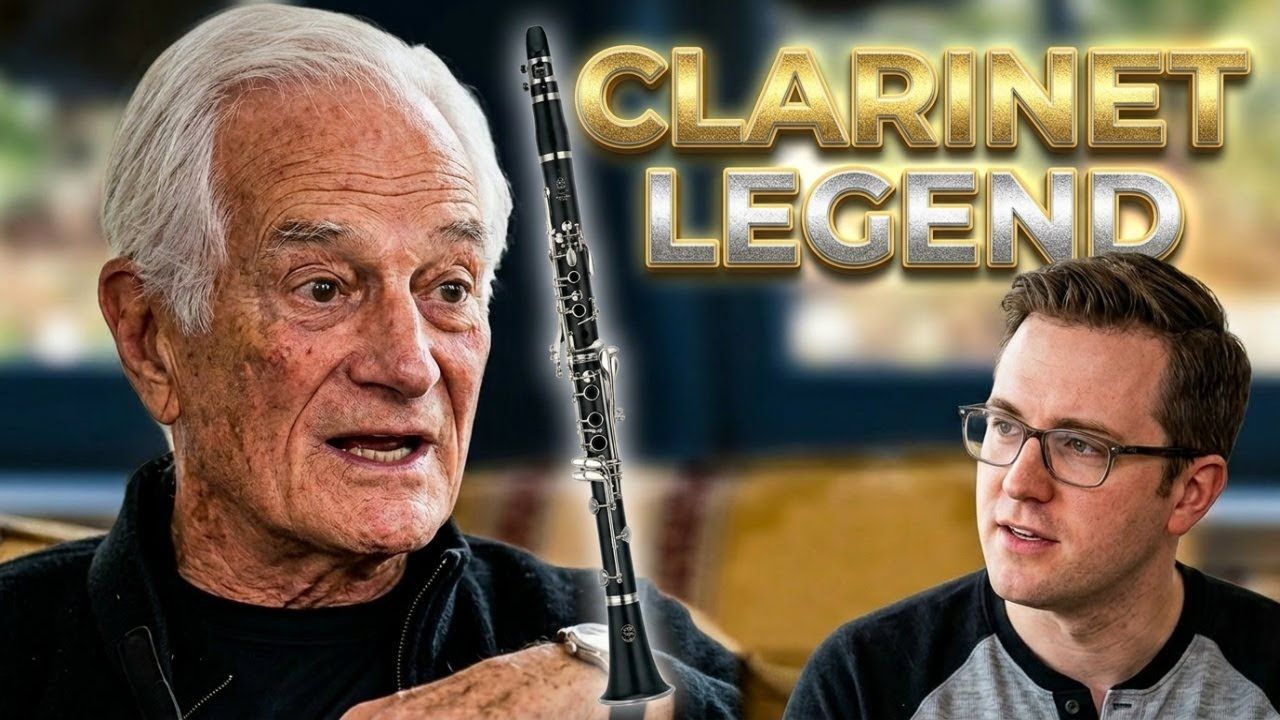
A conversation with Ron Odrich on instinct, jazz education, and the long way back to the clarinet.
There's a version of learning the clarinet that most of us know. You get a beginner book. A teacher assigns you a mouthpiece setup, shows you how to hold it, gives you a fingering chart. You start on low G. You work your way up.
Ron Odrich did not do this.
Ron is a clarinetist with a biography that doesn't fit neatly into any category: classically trained at the highest levels, a committed jazz player, a student of Bob Marcellus, someone who heard Charlie Parker live as a teenager and met Bird backstage, a dentist who lectured in Italy for 28 years, and a musician who took a 15-year break from serious practicing before finding his way back through a bottle of Bordeaux and an impromptu duo session with Eddie Daniels.
In Part 3 of our conversation on the Clarinet Ninja Podcast, Ron told me about the very beginning. And it started, as so many things do, with a record player and a clarinet he wasn't supposed to touch.
---
The Glissando That Started Everything
Ron's father was a professional woodwind doubler, active in New York radio, recordings, and jingles during an era when that meant steady work. There were instruments in the house. Clarinets, flutes, saxophones. The tools of his father's trade, mostly sitting on stands.
When Ron was around 10 years old, he heard Rhapsody in Blue. Specifically, the opening glissando. The one that rises from a low trill to a shrieking high note and announces the whole character of the piece.
"For some reason, as an 11-year-old, 10-year-old kid, I was ignited by that," Ron told me.
He picked up the clarinet when his father wasn't home. He figured out, on his own, that the reed needed to be wet. He played the Oscar Levant recording over and over until, as he put it, he "went right through all the acetate to the cardboard."
He didn't go to the piano to check the notes. He didn't look at a fingering chart. He listened, he tried, he adjusted. He figured out that fingers lift off gradually as you ascend. He figured out that there's a register shift somewhere in the middle. He got a chromatic scale.
He got the glissando.
"It was all intuitive," he said. "Completely intuitive."
---
First Chair Without Reading Music
When Ron's father came home and heard the glissando, he called in a teacher that same day. But the intuitive start left a gap: Ron still couldn't read clarinet notation.
He went to Bryant High School. In his freshman year, they asked him to audition for the band. He played what he knew, which was scales and the glissando. The bandmaster put him in first chair.
The problem: first chair had been occupied by his neighbor Freddy, who had been playing since age 5 and was not pleased.
"Out of necessity, I had to learn where the notes were," Ron said. He learned to read while sitting as assistant principal, building the formal knowledge to catch up with the ear that had gotten him there.
---
Birdland, Age 12: A Meeting with Buddy DeFranco
The other thing that shaped Ron early was Perdido. Specifically, the Buddy DeFranco recording. Ron learned the chorus by ear and played it until it was part of him.
His father took him to Birdland to see Buddy DeFranco playing with George Shearing's quintet. After the set, they went backstage. Ron, who was around 12 years old and, by his own description, "kind of obstreperous," told Buddy DeFranco that he was "disappointed."
Buddy asked why.
"I wanted to be the first bebop clarinet player," Ron told him.
Buddy DeFranco's response is the kind of thing you'd want a 12-year-old to hear: "There's a lot of room up here for another clarinet player. I'll help you if you like."
DeFranco came to the house for dinner. He became a friend and a teacher. And the influence stayed with Ron in a way that went beyond imitation. It gave him a model of what the instrument could do in a jazz context, a model he would spend years internalizing.
---
The Classical Foundation
Ron's musical education didn't stay informal. When the Korean War draft caught up with him, he found his way to the Airmen of Note, where he spent three years studying with Bob Marcellus.
Marcellus is one of the great figures in American clarinet pedagogy. He had become principal clarinetist of the National Symphony at 18, studied and taught at the highest levels, and brought a serious classical approach to his students. Ron practiced four to five hours a day. He built the technical and musical foundation that would make everything else possible.
"He was an interesting guy," Ron said of Marcellus. "He never went to college. He came out of the Air Force. At 17, he was playing second clarinet in the National Symphony."
The classical training didn't displace the jazz impulse. It gave it something to push against.
---
Hearing Charlie Parker and Meeting Bird
Ron first heard Charlie Parker play in person as a teenager, at the Three Deuces in New York. It was the kind of experience that stays with you.
"He filled the room up with the sound," Ron said. "I never heard him recorded the way the sound he gave. The ease with which he played everything. He just, everything was like, you know, playing a C major scale."
Years later, while Ron was with the Airmen of Note, Buddy DeFranco introduced him backstage to Parker. After years of hearing "cool, man" and other jazz hipster signifiers from his contemporaries, Ron shook Charlie Parker's hand.
Bird said: "Howdy, partner."
"All the hip guys trying to be Bird," Ron told me, "and here the real Bird is like a western cowboy."
---
Playing Jazz by Ear vs. Playing by Formula
One of the things I've always wanted to get Ron to articulate is how he actually learned to play jazz the way he plays it. Because it isn't just imitation. The ability to hear a tune you've never rehearsed and play through the changes with ease and musicality doesn't come from being a good imitator. Something else has to be happening.
Ron's answer circles back to where he started: the ear.
"If I heard a phrase on the radio, I could play it," he said. "I was learning by imitating, and I could hear what the changes were."
The harmonic information was never the obstacle. It was just something he heard, processed, and responded to.
We also talked about something I've noticed in jazz playing: a tendency toward what I call "hyper-diminished" playing, where certain scales and patterns get superimposed so freely that they stop sounding like they're responding to any particular song. Ron agreed with the diagnosis. He called it formulaic. You hear players who know all the right scales and alternate approaches, but you hear the same solutions over everything they play.
"When they're playing a tune," Ron said, describing what Eddie Daniels had put into words, "you wanna know that what's being played is in tribute of that song and that organization of harmonic sequences. And if you don't get that, then what are you doing? You're not playing the song."
---
The Hiatus and the Return
Here's the part of Ron's story I didn't know going into this episode: he stopped practicing for about 15 years.
He kept playing. He was lecturing in Italy for years, traveling there three times a year for two weeks at a time, and he always brought the clarinet. He played in jazz clubs there. He ran into Tony Scott a couple of times. But it was peripheral. He wasn't practicing.
What brought him back was a phone call to his dentist's office.
His father had heard someone play, and called Ron to tell him: "This is the way you would be playing if you kept on playing." The player was Eddie Daniels.
Around that same time, Ron had gotten involved in acting, doing the play Lenny (about Lenny Bruce), and Eddie Daniels was in the pit band. Ron called him up. He mentioned what his father had said. They arranged to meet.
"I got a bottle of Bordeaux," Ron told me. "I went up and met him. He was living on the West Side. And we sat down and played clarinet together for a while, and we got to be very close friends that way."
The friendship with Daniels didn't make Eddie Ron's teacher, as Ron is quick to say. But Eddie's influence, the experience of hearing what was possible on the instrument without limits or formulas, clearly reignited something.
---
What This Story Is Actually About
Ron's path doesn't fit the standard narrative about how you get good at music. He started by ear with no instruction and no sheet music. He landed first chair before he could read. He got jazz mentorship from Buddy DeFranco, classical training from Bob Marcellus, and eventually came back to serious playing after a decade and a half away.
The through line is the ear. The ability to hear something and go directly to doing it, without the intermediary steps of naming and analyzing. That's what got him the glissando at 10. It's what let him play through changes in the moment without preparation. And it's probably why, even after a long hiatus, the music came back.
"When I think about it in retrospect as an adult," Ron said, "maybe that's not such a bad way to learn something. You go right to doing it. Nobody's telling you what to do."
There's something for all of us in that. Even if our path was a lot more conventional.
---
*Listen to Part 3 of my conversation with Ron Odrich on the Clarinet Ninja Podcast, available on Spotify, Apple Podcasts, and YouTube.*
*If you're an adult clarinet player looking to get better at the instrument, check out the Clarinet Ninja Dojo. Whether you're just starting out, coming back after a long break, or a serious player who wants more of a challenge, there's a place for you*